

You’re thinking of selling your life insurance policy, but can you sell a policy with an irrevocable beneficiary? In many cases, yes. However, an irrevocable beneficiary has legal rights that can affect whether a life settlement or viatical settlement can move forward. Unlike a revocable beneficiary, an irrevocable beneficiary generally must agree before significant changes can be made to the policy. If you are considering selling your life insurance policy, understanding these rights can help you know what to expect during the process.
What Is an Irrevocable Beneficiary?
Most life insurance policies allow the owner to change beneficiaries at any time. When a beneficiary is designated as irrevocable, that person receives a protected legal interest in the policy’s death benefit.
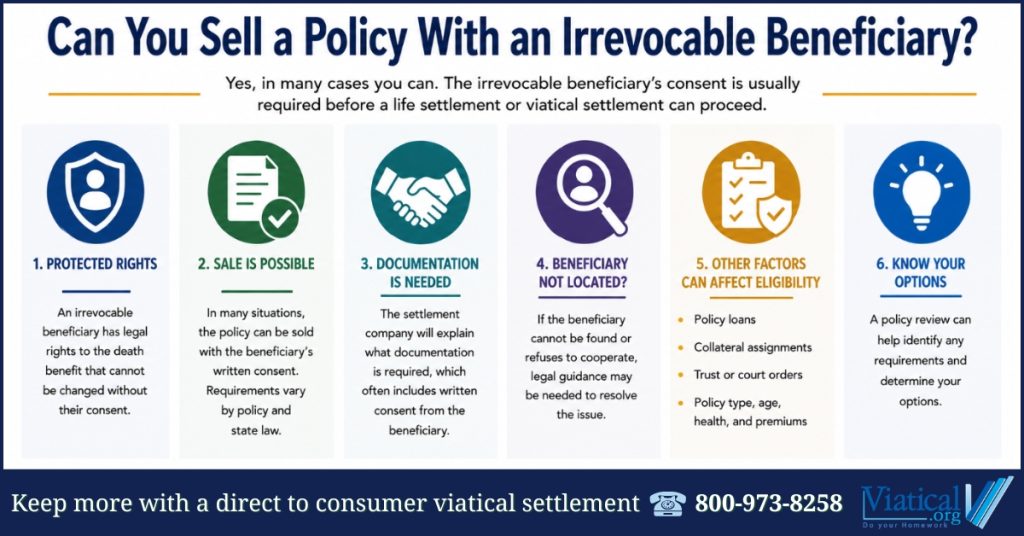
As a result, the policyowner typically cannot make certain changes without the irrevocable beneficiary’s written consent. Depending on the policy and applicable law, this may include changing beneficiaries, transferring ownership, assigning the policy, or selling it through a life settlement or viatical settlement.
Irrevocable beneficiaries are often named as part of a divorce agreement, business arrangement, or estate planning strategy.
Can You Sell a Life Insurance Policy with an Irrevocable Beneficiary?
Having an irrevocable beneficiary does not automatically prevent you from selling your life insurance policy. In many situations, the sale can still proceed after the beneficiary provides the required written consent.
This requirement exists because a life settlement transfers ownership of the policy to the purchaser. After the sale, the buyer becomes responsible for future premium payments and ultimately receives the death benefit. Since an irrevocable beneficiary has legal rights associated with that benefit, their approval is often necessary before ownership can be transferred.
The specific requirements depend on the policy provisions and applicable state law.
How Does the Settlement Process Address This?
During the underwriting process, the settlement company reviews the policy and ownership documents to identify any issues that could affect the transaction. If an irrevocable beneficiary is listed, the company will explain what documentation is needed before the sale can continue.
In many cases, the process simply involves obtaining the beneficiary’s written consent. Identifying this requirement early helps avoid unnecessary delays later.
What If the Beneficiary Cannot Be Located?
If an irrevocable beneficiary cannot be located or refuses to cooperate, selling the policy may become more complicated. Because that individual has legally protected rights, the settlement company must ensure those rights have been properly addressed before the transaction can proceed.
The available options depend on the policy language and the laws governing the policy. In some situations, it may be necessary to consult an attorney to determine whether the sale can move forward.
Other Factors That Can Affect Eligibility
An irrevocable beneficiary is only one factor that may influence whether a policy is eligible for a life settlement. Other considerations may include:
- Outstanding policy loans
- Collateral assignments
- Trust ownership
- Court orders or divorce agreements
- The type of life insurance policy
- The insured’s age and health
- Current premium obligations
Every policy is unique, so eligibility is determined only after a complete review.
What This Means for Policyowners
An irrevocable beneficiary does not necessarily prevent the sale of a life insurance policy, but it does create additional legal requirements that must be addressed. In many cases, obtaining the beneficiary’s written consent is enough to allow the transaction to proceed.
If you are unsure whether your policy has an irrevocable beneficiary or how that designation could affect life settlements or a viatical settlement, a policy review can help identify any requirements before the process begins. Understanding these issues early can make the transaction smoother and help you evaluate all of your available options. Please give us a call at 800-973-8258
 DO YOU QUALIFY?