

If you’re facing a cancer diagnosis, you may be wondering, “Can a young person with cancer sell their life insurance?” The answer is yes. As long as you’re over 18 and have a terminal or life-limiting illness, you may qualify for a viatical settlement, which allows you to sell your life insurance policy for immediate cash. This option can help relieve financial strain and provide money when you need it most.
What Is a Viatical Settlement?
A viatical settlement is the sale of a life insurance policy to a licensed buyer. Instead of waiting for the death benefit to be paid to beneficiaries after passing, you receive a lump sum while still alive. The buyer then becomes responsible for future premium payments and collects the benefit when the policy matures.
This arrangement was originally developed in the 1980s during the AIDS crisis to give patients access to funds for treatment and living expenses. Today, viatical settlements are available to anyone with a qualifying terminal diagnosis who owns a life insurance policy that meets eligibility requirements.
Why Age Doesn’t Matter with Terminal Illness
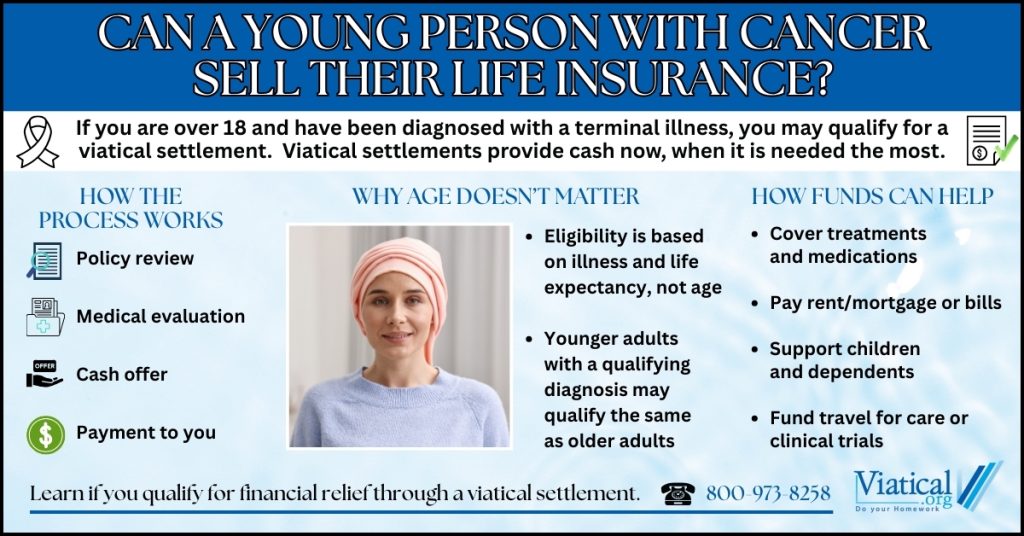
When it comes to traditional life settlements, age is a major factor. Those transactions are usually aimed at seniors over 65 who no longer need their policies. Viatical settlements work differently. With a terminal diagnosis, your age is not what determines eligibility. What matters most is your health status, life expectancy, and policy type.
This means that someone in their 20s, 30s, or 40s with a qualifying policy and a terminal illness like cancer can often access the same financial option that older adults use. The goal is to provide financial support during a time when it can make the greatest difference.
How the Process Works for Younger Patients
The viatical settlement process is straightforward:
- Policy review – Your life insurance policy is reviewed to confirm eligibility. Universal life, whole life, and convertible term policies commonly qualify.
- Medical evaluation – Your medical records are obtained with your consent so that a life expectancy estimate can be assessed.
- Offer stage – Based on your policy size, premium costs, and medical information, an interested direct buyer may present an offer to you.
- Payment – If you accept the offer, contracts are completed and ownership of the policy transfers to the buyer. You receive a cash payout.
The entire process is designed to be completed within weeks, giving you access to funds relatively quickly.
How Funds Can Help
Younger adults with cancer often face unique financial pressures compared to older patients. You may have a mortgage, student loans, or dependent children who rely on you. A viatical settlement for cancer patients can provide money for:
- Paying for treatments or medications not fully covered by insurance
- Covering travel expenses for specialized care or clinical trials
- Keeping up with rent, mortgage, or other household bills
- Supporting children or other dependents while you are in treatment
- Making adjustments to your home for comfort and medical needs
The flexibility of the funds is one of the most important benefits. You decide how to use the money, whether that is for medical costs, daily living expenses, or personal goals.
Important Considerations
Before moving forward, keep a few important points in mind:
- Policy type – Not every policy is eligible, but many standard permanent policies and convertible term policies are. In the case of terminal illness, some non-convertible term policies or group policies may also qualify.
- State regulations – Each state regulates viatical settlements differently, so the rules may vary depending on where you live. In most states, your policy will need to have been in force for a minimum of two years.
- Tax treatment – In most cases, the payout from a viatical settlement for someone with a terminal illness is not considered taxable income. Of course it is always best to consult with your trusted tax advisor.
Understanding these factors will help you make an informed decision about whether selling your policy is right for you.
Learn if You Qualify
A cancer diagnosis at any age can disrupt your financial stability. Can a young person with cancer sell their life insurance? The answer is yes. A viatical settlement may give you access to the funds you need now, allowing you to focus on treatment, family, and quality of life.
To learn if you qualify and to obtain a no-obligation policy appraisal, please give us a call at 800-973-8258
 DO YOU QUALIFY?