

Can you sell your life insurance policy after a stroke? Yes, you can if you qualify. A stroke diagnosis can make you eligible to sell your policy through a viatical settlement or life settlement. This option allows you to turn an existing policy into immediate cash that can be used for medical care, rehabilitation, long-term care, or household expenses.
Why a Stroke May Qualify You to Sell Your Life Insurance Policy
Strokes can have lasting effects on mobility, speech, and independence. Survivors often face long hospital stays, rehabilitation, therapy, and follow-up appointments that create financial strain. Some patients may need skilled nursing care or assisted living, and others may be unable to return to work. Because of these challenges, insurers and investors view life insurance policies held by stroke survivors differently than those held by healthy individuals. The increased health risks may make a policy more attractive to buyers in the secondary market.
Instead of letting a policy lapse or surrendering it for minimal cash value, selling it through a viatical settlement or life settlements can unlock significantly more value. This option may provide meaningful financial relief for patients and families adjusting to life after a stroke.
How a Viatical Settlement Works After a Stroke
A viatical settlement involves selling your life insurance policy to a viatical settlement purchaser. The investor pays you a lump sum that is greater than the cash surrender value but less than the full death benefit. After the sale, they become responsible for all future premium payments.
After a stroke, you may qualify for a viatical settlement if the event has resulted in permanent complications or a doctor determines that your life expectancy has been reduced. If the stroke was serious but not considered terminal, you may still qualify for a life settlement. While the payout may be smaller, it can still provide cash that might otherwise be locked away in an unused policy.
Factors That Affect Your Settlement Offer
Several key factors determine how much you can receive when selling your life insurance policy after a stroke:
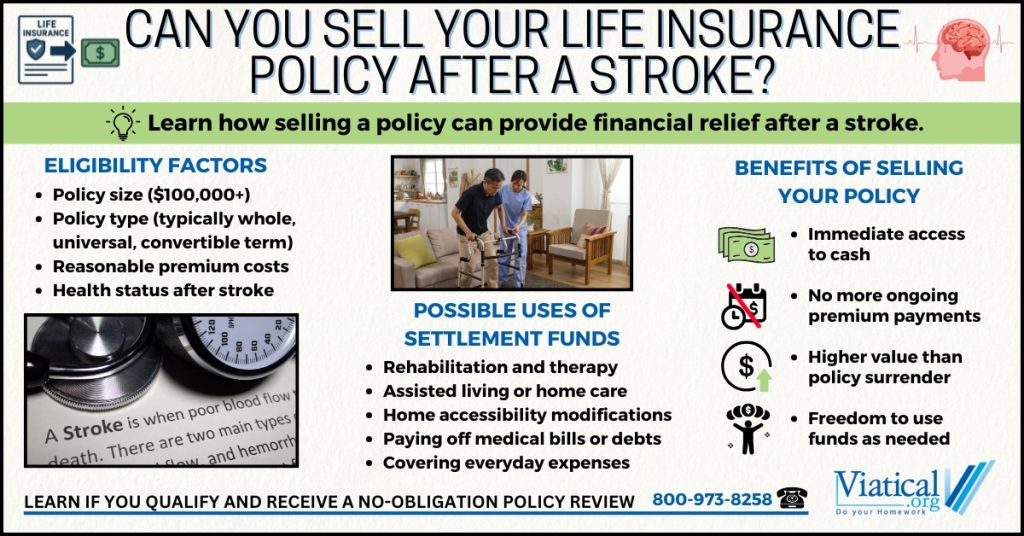
- Policy size – Larger policies usually see more interest from investors. Generally, the face value or death benefit of your policy must be $100,000 or more.
- Policy type – Whole life, universal life, and convertible term policies are preferred.
- Premium payments – Lower ongoing premiums make a policy more valuable to buyers.
- Health status – The severity of the stroke, long-term recovery prospects, and additional medical conditions influence the valuation.
- Age – Older policyholders typically receive higher offers than younger ones, since investors may expect a shorter holding period. This is not always the case though and younger insureds can qualify with serious health complications.
Understanding these factors can help you prepare for the settlement process and set realistic expectations.
How the Proceeds Can Be Used
There are no restrictions on how to use the money from a viatical or life settlement. Many stroke survivors and their families use the cash for:
- Rehabilitation, physical therapy, or speech therapy
- In-home nursing or long-term care facilities
- Home modifications, such as ramps or accessible bathrooms
- Paying off existing medical bills or household debts
- Covering everyday living costs when employment is no longer possible
The flexibility to use the funds where they are needed most is one of the biggest benefits of selling your life insurance policy after a stroke.
Benefits of Selling Your Life Insurance Policy After a Stroke
A viatical settlement after stroke diagnosis can offer financial stability during a time of uncertainty. Benefits include:
- Immediate access to cash for medical or personal needs
- Elimination of premium payments, freeing up monthly income
- A better financial outcome compared to letting the policy lapse or surrendering it
- Control over your policy, since you choose whether or not to sell based on the offers you receive
Is Selling Right for You?
Not everyone will decide to sell their life insurance policy after a stroke. Some may prefer to keep the coverage in place for their beneficiaries. Others may find that the immediate financial relief from a settlement outweighs the long-term benefit of the policy. Exploring your options can help you make an informed decision about what is best for your situation.
Selling your life insurance policy after a stroke is one way to relieve financial pressure and focus on recovery. If you qualify, it can provide the resources needed to manage medical care and maintain quality of life. If usually only takes a 5-10 minute phone call to learn if you’re eligible to access the hidden value in your policy. 800-973-8258
 DO YOU QUALIFY?