

Chemotherapy is one of the most common treatments for cancer, but it can also be one of the most expensive. Between hospital visits, infusion fees, prescription medications, and supportive care, patients often face overwhelming bills. Many families quickly realize that even with insurance, out-of-pocket costs can drain savings and create long-term financial strain. That’s why it’s important to talk about chemotherapy costs and how a viatical settlement can help, since a settlement can provide a financial lifeline by turning an existing life insurance policy into immediate cash when it is needed most.
The Rising Costs of Chemotherapy
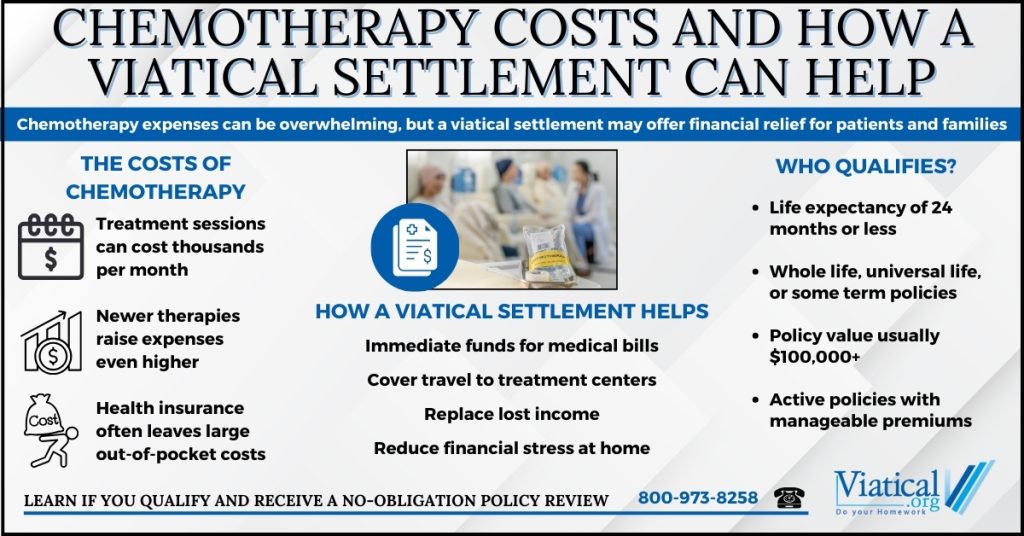
The cost of chemotherapy varies widely depending on the type of cancer, the drug regimen, and whether treatment is inpatient or outpatient. Some patients may face bills of several thousand dollars per month, while newer targeted therapies and immunotherapy can push expenses much higher. Even for those with health insurance, high deductibles, coinsurance, and non-covered services add up quickly. Transportation to treatment centers, time away from work, and the need for additional caregiving support only increase the financial burden.
The Impact on Families
Financial stress can be just as damaging as the physical side effects of chemotherapy. Families often have to make difficult decisions about how to balance medical needs with everyday expenses such as housing, utilities, and food. Many patients report that the financial strain of treatment affects their emotional well-being, leading to added anxiety during an already difficult time. Relieving some of that pressure can make a meaningful difference in quality of life.
How a Viatical Settlement Can Help
A viatical settlement allows a policyholder with a serious or life-threatening illness to sell their life insurance policy to a licensed provider for a lump-sum cash payment. This payment is typically much higher than the cash surrender value offered by the insurance company and can be used however the policyholder chooses. For patients undergoing chemotherapy, this means having funds available to:
- Pay for medical bills, including chemotherapy sessions, prescriptions, and supportive treatments
- Cover travel costs for specialized care at treatment centers
- Replace lost income if the patient or a family caregiver is unable to work
- Reduce everyday financial stress by keeping up with mortgage, utilities, and household needs
By providing access to immediate funds, viatical settlements can give patients and families more flexibility and control over how they handle the financial challenges of cancer care.
Who Qualifies for a Viatical Settlement?
Viatical settlements are generally available to people diagnosed with a terminal or life-threatening illness, including many cancer patients undergoing chemotherapy. Eligibility often depends on:
- Health status: Most viatical settlements are available when a person has a life expectancy of 24 months or less. Those with a longer life expectancy can still qualify for life settlements.
- Policy type: Whole life, universal life, and convertible term policies qualify most often, but other policy types may qualify.
- Policy value: Policies usually must have a face amount of at least $100,000
- Premium costs: Policies with lower ongoing premiums are typically more favorable
Each situation is unique, but patients facing the high costs of chemotherapy often meet the qualifications to access funds through a viatical settlement. Because every case is different, it is always best to call to learn if you qualify to sell life insurance for chemotherapy expenses.
Do Your Homework
Not every policyholder will qualify, and the amount received depends on factors such as the policy’s face value, premiums, and the insured’s health status. However, for those who do qualify, a viatical settlement can turn an existing life insurance policy into invaluable financial support during a critical time.
To learn if you qualify, please give us a call at 800-973-8258. We can assist you with a no-obligation policy appraisal so you’ll have an idea of how much hidden value your policy may have.
 DO YOU QUALIFY?