

A diagnosis of bile duct cancer can bring emotional, physical, and financial stress, but there may be untapped resources that can help. One of the most overlooked financial options for bile duct cancer patients with life insurance is the ability to access the value of an existing life insurance policy through a viatical settlement or other living benefits.
Understanding Bile Duct Cancer and Treatment Costs
Bile duct cancer, also known as cholangiocarcinoma, is a rare and aggressive cancer that forms in the bile ducts connecting the liver and small intestine. It’s typically classified into three types based on location: intrahepatic (inside the liver), perihilar (near the liver), and distal (closer to the intestine). Treatment depends on the cancer’s type, stage, and whether it has spread, but it can be complex and expensive leaving patients and their families wondering how to pay for cancer care.
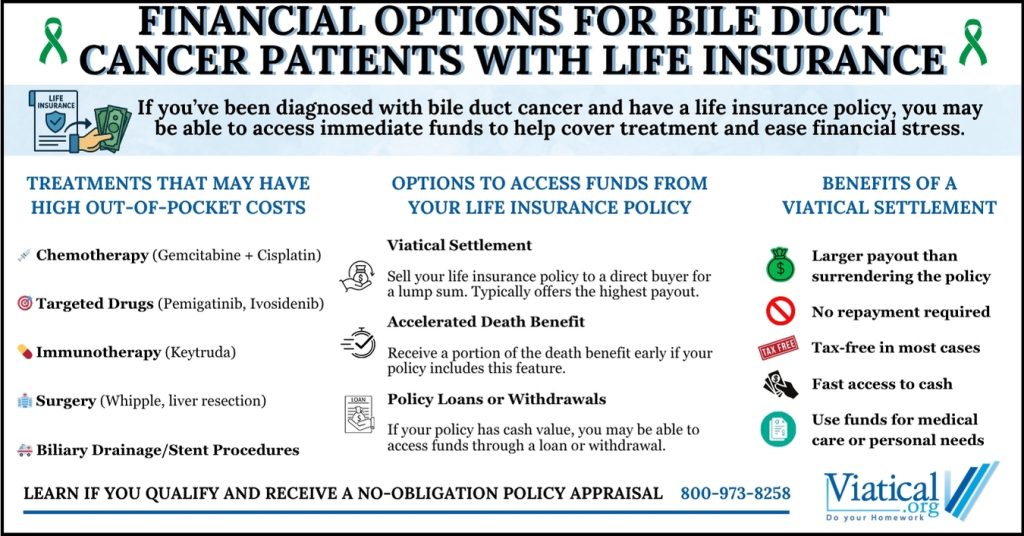
Common treatments for bile duct cancer include:
- Surgery (such as bile duct resection, Whipple procedure, or liver transplant)
- Radiation therapy, often combined with chemotherapy to shrink tumors or relieve symptoms
- Chemotherapy, typically using drugs like gemcitabine and cisplatin
- Targeted therapies, such as pemigatinib or ivosidenib for tumors with specific genetic mutations
- Immunotherapy, including checkpoint inhibitors like pembrolizumab (Keytruda) in certain cases
- Biliary drainage procedures, such as stent placement to relieve blockages
- Clinical trials, which may offer access to experimental therapies
Even with insurance, patients often face high out-of-pocket costs for treatments, second opinions, hospital stays, travel to specialized centers, and supportive care.
What Is a Viatical Settlement?
A viatical settlement allows someone with a qualifying medical condition, such as advanced bile duct cancer, to sell their life insurance policy to a licensed buyer in exchange for a lump-sum cash payment. The buyer becomes the new owner and beneficiary, takes over premium payments, and collects the death benefit in the future.
This option can provide immediate funds to use however the policyholder sees fit, whether to help cover treatment costs, pay down debt, or maintain financial stability.
Who Qualifies for a Viatical Settlement?
Viatical settlements are typically available to individuals with a life expectancy of 24 months or less. Each case is reviewed individually, and a diagnosis of bile duct cancer, especially at an advanced stage, often meets eligibility requirements.
In addition to medical status, other factors include:
- Type of policy: Most individual life insurance policies qualify, including term, whole life, and universal life.
- Policy size: The face value usually must be at least $100,000.
- Policy status: The policy must be active and past the contestability period.
Patients with term life policies may still qualify, as long as the policy is active and meets the provider’s underwriting criteria.
Other Ways to Use Life Insurance While Living
Aside from viatical settlements, some life insurance policies include features that may offer access to funds during the policyholder’s lifetime:
- Accelerated Death Benefits (ADB): This rider, if included in the policy, may allow terminally ill policyholders to access a portion of the death benefit early. However, not every policy has this rider and not everyone will qualify. It is important to contact your insurance company to learn if this option is available to you.
- Policy Loans or Withdrawals: For permanent policies with built-up cash value, loans or withdrawals can provide funds in the short term. However, they may reduce the death benefit and risk policy lapse if not properly managed.
These options may be limited by policy type or availability, so it’s important to review the terms of your policy and compare options before making any decisions.
Using Funds From a Viatical Settlement
One advantage of a viatical settlement is the flexibility it offers. There are no restrictions on how the funds are used, and in many cases, the proceeds are tax-free when the seller is terminally ill. Common uses include:
- Covering out-of-pocket treatment costs and medical bills
- Funding travel to cancer centers or specialists
- Paying for home health care or family caregivers
- Offsetting lost income due to treatment or disability
- Reducing debt or mortgage burdens
- Gaining peace of mind during an uncertain time
In some cases, the funds help patients access newer or experimental treatments not covered by insurance or offered in their area.
How to Get Started
If you or a loved one is facing bile duct cancer and own a life insurance policy, it may be worth exploring whether a viatical settlement is an option. The process typically starts with a no-obligation review of your policy and medical status.
To learn if you qualify and find out what options may be available to you, please give us a call at 800-973-8258.
 DO YOU QUALIFY?