

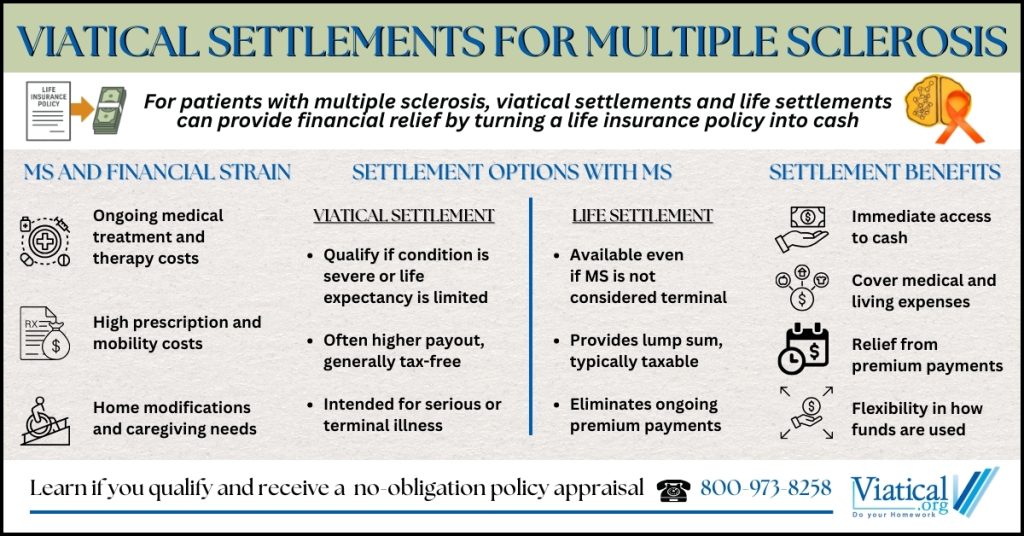
Living with multiple sclerosis (MS) can bring physical, emotional, and financial challenges. For those holding a life insurance policy, exploring viatical settlements for multiple sclerosis may provide a much-needed source of funds. Some patients may qualify for a viatical settlement if their health condition is considered severe or life expectancy is significantly limited. However, many people with MS will instead qualify for a life settlement, which still allows policyholders to sell their life insurance for a lump sum that is typically greater than the cash surrender value but less than the death benefit.
Understanding Multiple Sclerosis and Financial Needs
Multiple sclerosis is a chronic neurological condition that affects the brain, spinal cord, and optic nerves. Symptoms vary widely, ranging from fatigue and mobility issues to vision problems and cognitive changes. The progressive nature of MS often requires ongoing treatments, therapies, and lifestyle adjustments, many of which can create significant financial strain. Even with health insurance, out-of-pocket expenses such as prescription medications, mobility aids, home modifications, or in-home caregiving can add up quickly.
This financial reality is one reason why patients and families look toward alternative resources such as viatical settlements or life settlements. Selling a policy can help cover medical bills, daily living expenses, or simply provide peace of mind by reducing financial stress.
How a Settlement Works
Both life settlements and viatical settlements involve selling an existing life insurance policy to a third-party buyer, usually an institutional investor. Once purchased, the buyer takes over premium payments and collects the death benefit in the future. The policyholder, in turn, receives an immediate cash payment.
For patients with multiple sclerosis, eligibility and the amount offered depend on several factors, including:
- Policy Type and Size – Most buyers prefer universal life, whole life, or convertible term policies with face values of at least $100,000.
- Health Condition – MS is not always considered terminal, but its impact on life expectancy plays a role in determining whether a patient qualifies for a viatical settlement or a standard life settlement.
- Premium Costs – Lower ongoing premiums generally increase the value of a policy in the secondary market.
Benefits for MS Patients
Patients with multiple sclerosis who pursue settlement options may benefit in several ways:
- Immediate Access to Cash – Funds can be used to cover medical treatments, assistive devices, or to support daily living expenses.
- Improved Quality of Life – Many patients choose to use settlement funds for travel, family experiences, or other meaningful activities.
- Relief from Premium Payments – Once the policy is sold, the former policyowner no longer has to maintain costly premiums.
- Flexibility – Unlike loans or withdrawals, settlement proceeds are not restricted, giving patients freedom to allocate funds as needed.
Important Considerations Before Selling
While life and viatical settlements can be valuable options, patients should carefully evaluate the decision. Some important factors to consider include:
- Impact on Beneficiaries – Selling a policy means loved ones will no longer receive the death benefit. In some cases, with larger policies, you may be able to sell a portion of your policy and retain a portion for beneficiaries.
- Tax Implications – Viatical settlements for terminally ill patients are generally tax-free, but life settlement proceeds are typically taxable. Always consult with your trusted tax advisor.
Understanding Your Options
For patients and families dealing with the uncertainties of multiple sclerosis, the ability to convert a life insurance policy into immediate financial support can be life-changing. Whether someone qualifies for a viatical settlement or a life settlement, exploring these options ensures that policyholders are aware of the potential financial resources available to them.
To learn if you qualify, please give us a call at 800-973-8258.
 DO YOU QUALIFY?